Why sponsors choose DVCR for THR studies
THR studies require more than standard clinical trial execution. Sponsors need a site that understands controlled product use environments, topography collection, product handling, participant observation, PK and biomarker sampling and the operational details that can affect study quality.
- Dedicated tobacco and nicotine research team
- Purpose-built, individual smoking rooms
- Dedicated ad libitum use rooms
- Controlled environments for product-use observation
- Dedicated pharmacy preparation and product-weighing capabilities
- Experienced bioanalytical and regulatory partners
- Multicenter expertise
Tobacco and nicotine study capabilities
Our 100-bed clinical pharmacology unit is located in the Kansas City metropolitan area and supported by experienced professionals who have conducted numerous tobacco and nicotine studies across a variety of product types including cigarettes, ENDS/vapes, oral nicotine pouches and smokeless tobacco, heated tobacco and other reduced-risk products.
Purpose-built exposure rooms, an experienced pharmacy team, bioanalytical capabilities and access to regulatory expertise allow us to support complex study requirements through an integrated clinical research model.
01
Smoking rooms
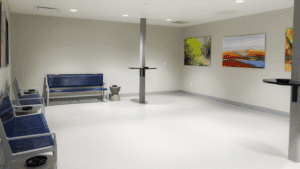
Our clinical pharmacology unit houses seven indoor exposure rooms, including two large rooms and five individual rooms. Advanced air handling, ventilation and filtration systems allow tobacco and nicotine studies to be conducted within a controlled indoor clinical environment.
These dedicated rooms support:
- PK and abuse liability data collection during product use
- Purpose-built, individual smoking rooms
- Dedicated ad libitum use rooms
- Direct observation of topography and product-use compliance and behaviors
- A variety of volunteer group sizes
- A range of tobacco and nicotine product types
02
Dedicated pharmacy capabilities
Our 2,500-square-foot pharmacy includes a dedicated area for preparing tobacco and nicotine harm reduction products. The pharmacy is equipped to weigh study products both pre and post product administration, as well as collect used study product for future analyses.
Our pharmacists have significant experience handling tobacco and nicotine products and work closely with clinical teams to support protocol-specific preparation. The pharmacy team has robust Standard Operating Procedures (SOPs) that dictate proper handling of products from receipt at the site until the product leaves the clinical pharmacology unit after study completion or is destroyed per sponsor requirements.
03
Bioanalytical laboratory support
PK and biomarker samples are analyzed in a bioanalytical laboratory with deep experience in the THR space. Services include the application of bioanalytical methods for biomarker analysis, the development of new bioanalytical methods and method validation in accordance with FDA guidelines. Analyses include biomarker analysis for tobacco harm reduction, chemical risk assessment and metabolite identification.
04
Multicenter capabilities
Our external site network has a proven track record of undertaking THR studies. This model provides a strategic advantage for larger, multicenter trials. Through a rigorous feasibility and site qualification process aligned with ICH GCP E6(R2/R3) guidelines, we ensure the selection of high-performing sites capable of meeting recruitment targets and delivering study milestones on schedule.
05
Recruitment and patient access
Recruitment is often one of the most important determinants of study success in THR research. Drawing from our database of adult smokers and nicotine users, we support recruitment across a range of product categories. Our team has experience screening for product use history, nicotine consumption patterns and protocol-specific eligibility requirements. We also manage the confinement, crossover and repeat-visit schedules common in THR studies. Through proactive participant engagement and retention strategies we maintain study continuity and support reliable enrollment and completion throughout the program.
06
Regulatory consulting
We provide scientific and regulatory support for tobacco and nicotine products through a collaborative network of experienced specialty partners.
By integrating clinical research, regulatory strategy and scientific justification, we help clients develop evidence to support Premarket Tobacco Product Applications (PMTAs) and related submissions. Support can extend from early product development and manufacturing considerations through clinical evidence generation and final submission planning.
Our organization applies the quality and oversight standards of pharmaceutical clinical research to tobacco and nicotine product development while providing a clear path through complex regulatory requirements.
07
Medical Writing Services
We provide comprehensive medical writing services for tobacco and nicotine clinical studies, including full study design, synopsis and protocol development and Clinical Study Report (CSR) writing.
THR clinical study experience
DVCR has significant expertise in the conduct of a wide range of tobacco and nicotine clinical studies such as:
Pharmacokinetic
PK studies evaluate nicotine delivery by measuring the rate and extent of nicotine absorption. Under the APPH standard, this data helps assess whether a product provides enough nicotine to support complete switching among adult smokers while informing potential dependence and initiation risks.
Abuse Liability
Evaluates the likelihood that a tobacco/nicotine product will produce dependence and sustained use, while also informing its potential to serve as a substitute for more harmful tobacco products. Within the APPH framework, these evaluations consider the product’s addictiveness, abuse or misuse potential, and nicotine exposure profile to determine whether it supports adult smoker switching without disproportionately increasing initiation or dependence among non-users.
Biomarkers of Exposure
DVCR supports Biomarker of Exposure programs evaluating nicotine uptake and exposure to harmful or potentially harmful constituents across product categories.
Biomarkers of Potential Harm
Evaluates short-term health effects such as inflammation and oxidative stress.
Topography
Measures how individual users consume the product, i.e. number of puffs or products used, puff/use duration, puff intensity, time between puffs or product use.
Bioequivalence
Compares two different products to demonstrate they have equivalent systemic nicotine exposure and absorption.
Tobacco harm reduction experts
Featured study
Challenge
A THR study required the rapid startup and execution of a complex oral nicotine pouch and abuse liability trial involving multiple products, controlled and ad libitum use sessions and intensive pharmacokinetic sampling. The goal was to enroll 30 participants. The compressed startup timeline required protocol finalization, regulatory activities, vendor coordination and operational planning to move forward in parallel while maintaining study quality and readiness.
Approach
We brought together the cross-functional study teams to develop and implement a coordinated study plan for recruitment and execution. Detailed workflows were established for participant confinement, timed product-use sessions, serial blood collections, subjective assessments, product accountability and collection of used nicotine pouches for residual analysis. Proactive timeline management enabled the study to progress according to the sponsor’s planned schedule.
Outcome
The study was successfully initiated, enrolled 36 participants as it progressed through clinical execution within the planned timeline. Through proactive timeline management, close cross-functional collaboration and early engagement of external partners, the team met the sponsor’s accelerated objectives while supporting high-quality data collection and study conduct. The project demonstrated our ability to execute complex THR studies under compressed timelines without compromising quality.
Related resources
Considering DVCR for your THR study?
Talk to a team with the infrastructure and experience to support the specialized requirements of tobacco and nicotine research.
We will discuss your product, protocol and development goals, then explain how our clinical unit, exposure rooms, pharmacy capabilities, bioanalytical support and regulatory network can support your study from planning through completion.