Why DVCR?
Built differently for cardiac assessments
A Clario Certified, purpose-built site
Earning that certification required collecting continuous cardiac data in a mock trial environment, with Clario’s experts reviewing and validating the output against their standards for quality and integrity. Our team includes Clario Site Champions reflecting hands-on proficiency with the early precision QT (EPQT) methodology and platform. For sponsors preparing regulatory submissions or communicating site selection decisions to partners, it is a verifiable credential that speaks directly to site capability.
Specialized cardiac infrastructure
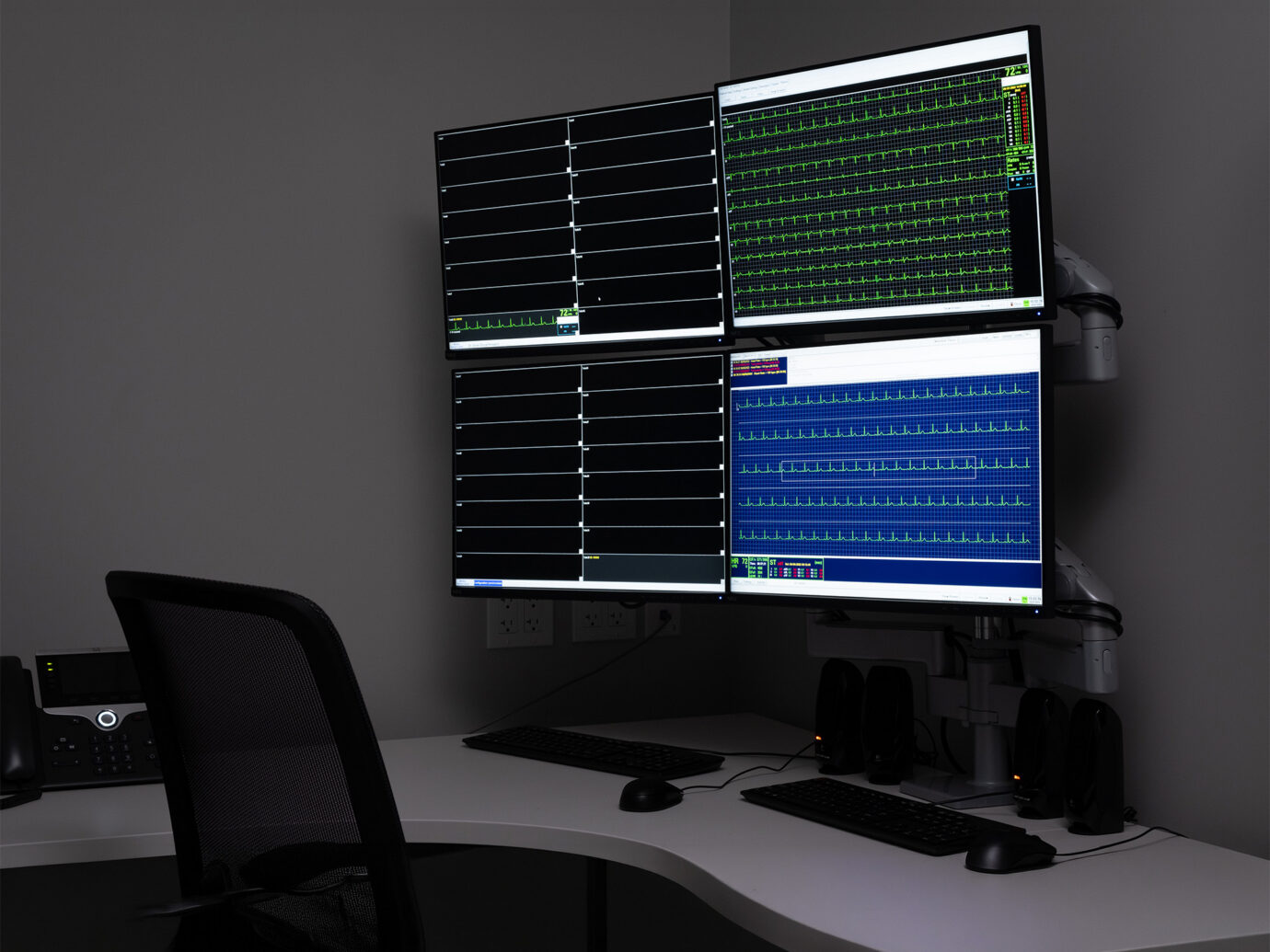
Our clinical pharmacology unit includes a dedicated cardiac telemetry room built around the 48-channel telemetry system. Running on a dedicated on-site Wi-Fi network with S4 wireless transmitters, the setup supports continuous Holter monitoring, remote tracing quality checks and direct data transmission to Clario’s cloud-based portal, so sponsors have uninterrupted cardiac data and direct visibility into collection quality throughout the monitoring session.
Flexibility across both QT pathways
We have the operational and scientific expertise to execute EPQT assessments embedded in first-in-human (FIH) studies and standalone thorough QT (TQT) trials. Our teams engage early on in study design to help determine the right pathway given asset characteristics, plasma exposure expectations and development program timelines and adapt as those parameters evolve.
Direct access and proactive communication
Our sponsors have direct access to the clinical and project staff managing their study. Communication is structured to be proactive: frequent updates throughout execution, issues surfaced and addressed before they affect timelines, and clear accountability at every stage. Sponsors have visibility into execution throughout the study, not just at key milestones.
Stable teams from startup to CSR
The same clinical and operational staff carry full protocol knowledge from startup through closeout. Consistent team membership preserves institutional knowledge and accountability across every study phase, so sponsors maintain direct access to the staff with protocol expertise at every transition point.
Our approach to QT/TQT studies
Every cardiac assessment program starts with a study design decision: embed early precision QT assessments into a FIH study or run a standalone TQT. We engage sponsors about that question before the protocol is finalized, because the choice shapes subject requirements, extraction design and the regulatory path forward.
01
Early precision QT (EPQT)
EPQT assessments are built into the single ascending dose (SAD)/multiple ascending dose (MAD) design of a FIH trial using concentration-effect modeling alongside high-precision ECG analysis. When designed and executed correctly, that approach can:
- Satisfy ICH E14 requirements with greater analytical confidence than conventional 12-lead methods
- Reduce the risk of inconclusive or false-positive results that could mislabel a safe compound as QT-prolonging
- Support a TQT study waiver, potentially removing a multi-million-dollar standalone study from the development program
02
Thorough QT/QTc (TQT)
For TQT studies, we execute a double-blind, randomized crossover design in healthy volunteers, typically enrolling 20-40 subjects across four treatment groups:
- Placebo
- Positive control
- Therapeutic dose
- Supratherapeutic dose
Studies are typically positioned at the end of Phase 2 or run in parallel with Phase 3.
03
Data visibility and delivery
Regardless of study design, sponsors have real-time visibility into data quality through the Clario portal throughout the study, not just at closeout. Continuous cardiac data captured on-site is transmitted directly to Clario’s cloud-based portal for expert analysis and archived through submission preparation.
QT infrastructure
Dedicated cardiac telemetry room
Our clinical pharmacology unit includes a cardiac telemetry room configured specifically for QT assessment studies. The room is built around our telemetry system with 48 individual monitoring channels, supporting simultaneous continuous monitoring of multiple study participants throughout each dosing period.
Our telemetry system uses S4 wireless transmitters (12-lead units operating as Holter monitors) on our dedicated Wi-Fi network. Key capabilities include:
- On-site cardiac data archiving to a dedicated server
- Remote monitoring of tracing quality by site staff, allowing rapid response to lead issues
- Reduced electrode count for improved volunteer comfort and retention
Each study volunteer is prepared and patched with attention to electrode placement, anatomical landmarks, and skin preparation. Electronics restrictions are enforced during extraction windows and site staff verify lead integrity in real time via our telemetry system, so data quality is protected at the point of collection, before issues reach the analysis stage.
ACLS-certified safety team
Our dedicated safety team holds current Advanced Cardiovascular Life Support (ACLS) certification, supporting the heightened cardiac monitoring requirements of these studies.
Related resources
Planning an early QT or TQT study?
Talk to a team built
specifically for it.
We operate as an extension of sponsor teams, bringing the scientific knowledge, operational discipline and communication model that cardiac assessment studies require. Whether you are still determining the right QT pathway for your asset or ready to scope a protocol, we will walk you through our approach: study design considerations, realistic timelines and the site capabilities that support clean, submission-ready cardiac data.