Why DVCR?
Significant expertise in study set-up and execution of food effect study designs
Precise meal handling
for data integrity
The composition of the critical meal, how much the volunteer ate and exactly when it was consumed in relation to study drug dosing all shape the systemic exposure being measured. Our team has conducted countless food effect studies and executes both pilot and definitive designs as outlined in the FDA guidance on assessing the effects of food on drugs. That experience is reflected in the precise control we maintain for fed and fasted conditions.
Meal logic built into eSource
Meal sequencing for fed versus fasted is built into our cloud-based eSource. Form visibility is dependent on how each volunteer is randomized, and meal forms appear only for the volunteers assigned to eat that day. This reduces the risk of human error in serving a critical meal and, with it, the integrity of the food effect comparison.
Critical meals captured
to the minute
For every critical meal, volunteer wristbands are barcode scanned to record precise start and stop times, percentage consumption is recorded in eSource and a countdown feature keeps the meal-to-dose interval on protocol. Standardizing meal timing minimizes scheduling-related variability, allowing observed PK differences to be attributed to food.
Dedicated oversight during critical meals
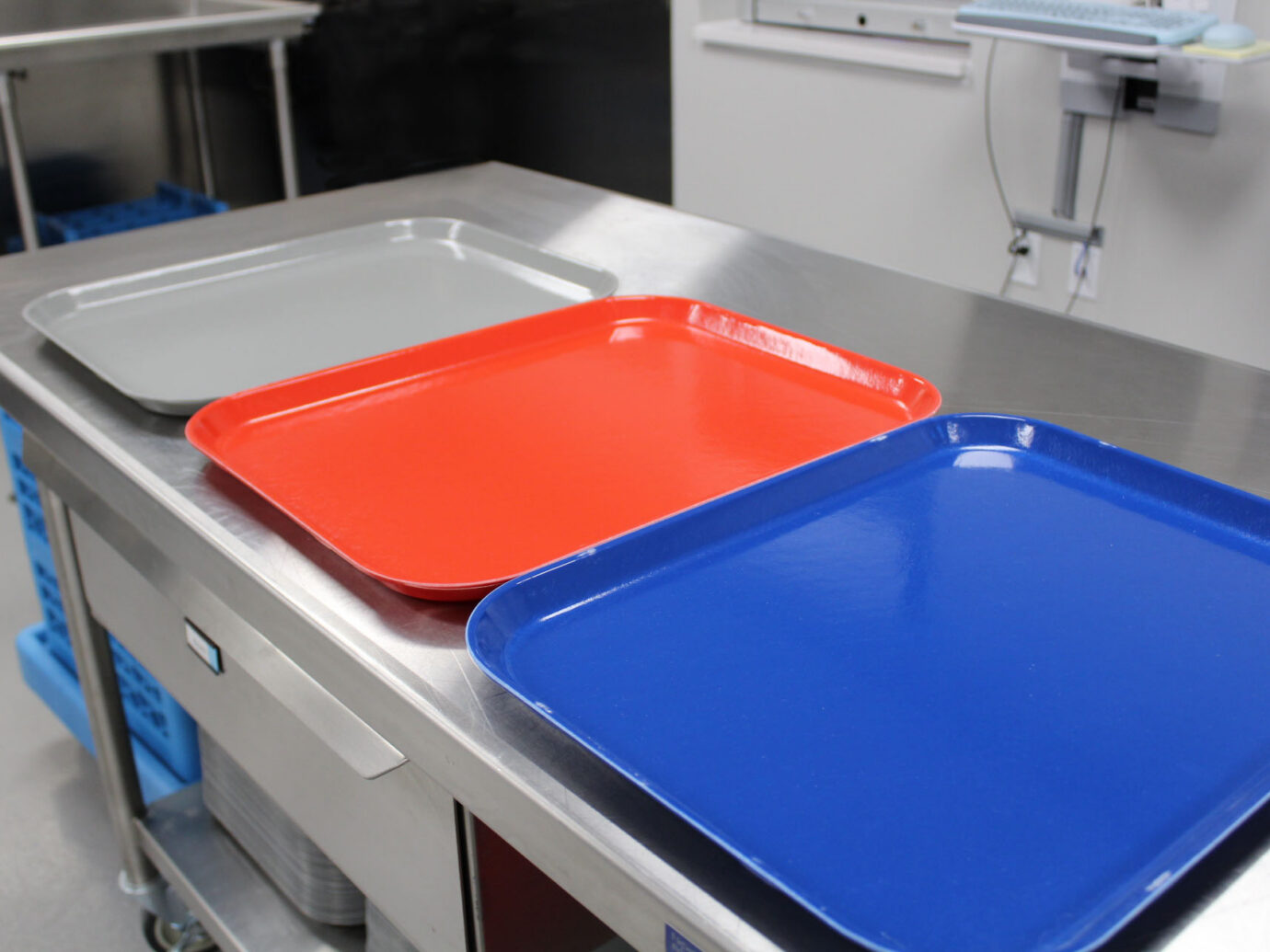
During critical meals, a DVCR staff member observes volunteers to confirm meal compliance and dosing eligibility, and meals for those volunteers are dispensed on color-coded trays as a clear visual check. This helps keep protocol deviations out of the dataset.
Meals designed to
the protocol
Meals are prepared in advance or on site in our fully equipped kitchen, and for protocols with specific composition requirements we tailor the menu so the high-fat or low-fat meal meets study specifications and FDA guidelines. Menus are presented to sponsors for review and approval before study start-up, so the meal that defines the fed condition is agreed upon before the first volunteer is dosed.
Our approach to food effect studies
It is recommended that Sponsors conduct a pilot food effect study early in the clinical development process. We can build a pilot assessment into the single ascending dose (SAD) arm of a first-in-human study once dose escalation reaches a therapeutically relevant level, which gives sponsors an early read on whether food matters before a definitive study is designed.
01
Pilot food effect study
- Preliminary assessment of a high-fat meal on systemic exposure, often incorporated into the SAD arm of a first-in-human study
- Cross-over design to support meaningful fed versus fasted conclusions
- Early signal on whether the drug should be taken with food in subsequent trials
02
Definitive food
effect study
- Randomized, single-dose, two-treatment, two-period crossover design for the pivotal fed fasted assessment
- Standardized fed and fasted conditions, including the overnight fast, controlled meal-to-dose interval and water restriction windows
- Both male and female volunteers enrolled where the indication and safety profile allow, supported by our recruitment capabilities
03
Meal control
and data capture
- eSource meal sequencing tied to randomization, with forms shown only for assigned volunteers
- Barcode-captured meal start and stop times, percentage consumption and countdown timing
- Meals prepared to FDA composition specifications, with sponsor menu approval before start-up
Clinical pharmacology
unit infrastructure
Unit and kitchen
- 100-bed clinical pharmacology unit designed for the conduct of pharmacokinetic studies, including food effect trials
- Fully equipped on-site kitchen for advance or on-site meal preparation
Data systems
- Cloud-based eSource used across nearly all aspects of study conduct, including meal capture
- Barcode scanning and countdown features for precise meal and dosing timing
Featured study
Challenge
A sponsor required 24-hour cerebrospinal fluid (CSF) collections during a crossover food effect study. The specialized sampling procedures required careful coordination, intensive participant monitoring and rigorous operational oversight.
Approach
We utilized dedicated private suites, coordinated anesthesiologist-supported catheter placement and assigned experienced clinical staff to conduct the collections. Investigators maintained close oversight of participant safety throughout study conduct.
Outcome
The study was successfully completed, delivering the CSF pharmacokinetic data required by the sponsor while maintaining participant safety and study quality.
Related resources
Planning a food effect study?
Talk to a team that controls the meal as closely as the dose.
Whether you are deciding between a pilot and a definitive design or choosing a CRO, we will help you evaluate the approach that best fits your study, including meal design, compliance capture and the unit capabilities that keep the food variable controlled.